
Federal Pacific and Zinsco Panels: Why They Get Replaced
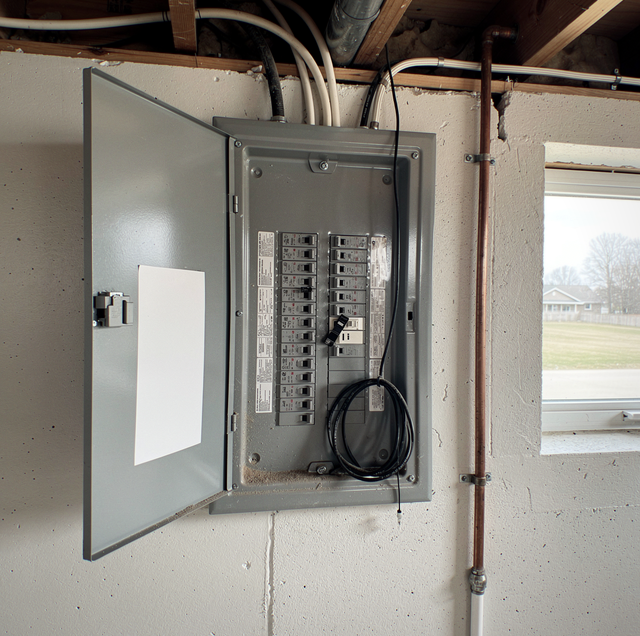
You open the panel door, maybe because a breaker keeps kicking off and won't reliably reset, or because you're touring a house before closing and want a look at the breakers and labels. The label under the door isn't a brand you recognize from any hardware store shelf. Instead of Square D or Eaton, it reads Federal Pacific Electric, or Zinsco, or maybe a name like GTE-Sylvania if the panel changed hands during a manufacturer buyout. That sticker, on its own, is often the reason an electrician recommends replacing the panel rather than fixing one breaker.
Federal Pacific Electric and Zinsco were both major panel manufacturers from roughly the 1950s through the early 1980s, installed in enormous numbers of homes built during that stretch. Neither company makes panels today. Federal Pacific stopped production decades ago after its breakers came under sustained scrutiny, and Zinsco's brand disappeared after a series of ownership changes. What both left behind is a panel design with a known pattern: breakers that don't reliably interrupt current when something actually goes wrong.
The Breaker's Only Job Happens in a Moment You Never See
A breaker sits in its slot for years doing almost nothing that anyone notices. You flip it off to work on an outlet, flip it back on, and that's the extent of most people's experience with it. Its real job only shows up during a short circuit or a sustained overload, the moment current spikes past what the wire can safely carry and the breaker has to open the circuit fast enough to stop it. It works the same way a seatbelt does: it rides along unused for years, and the one time its performance actually matters is the moment you can't plan for.
That's exactly the moment Federal Pacific and Zinsco panels have a known weakness. Field reports and testing going back decades point to the same pattern in Federal Pacific's "Stab-Lok" breakers: a trip mechanism that can fail to open the circuit under fault conditions even though the breaker looks and feels completely normal in daily use. Zinsco panels have a related but distinct issue: an aluminum bus bar that oxidizes and overheats at the breaker interface, then fuses to the breaker's contacts. When that happens, the switch on the breaker can move to the "off" position while the internal contacts stay welded together, so current keeps flowing even though every visible sign says the circuit is open.
Heat Cycling and Heavy Loads Push a Marginal Connection Further
None of this happens because a panel has a single bad day. It happens gradually, as connections that were already just adequate get pushed by ordinary use. Heavy electrical loads that run for extended stretches keep panels, breakers, and connections working close to their capacity, and that ongoing demand is usually what pushes a marginal panel or a loosening connection toward failure. Repeated heating and cooling as loads cycle on and off makes metal expand and contract at the connection points, and on a bus bar already prone to fusing or corrosion, that cycling is part of what pushes a breaker from still working to no longer tripping.
Grid switching adds another layer. Lightning strikes near the service line and routine switching events on the utility grid both send brief surges through household wiring, and a panel with degraded internal connections has less margin to absorb such spikes safely. It's part of why panel-level and whole-house surge protection is worth considering on any panel, old or new.
What to Look for Without Opening the Panel Yourself
You don't need to remove a panel cover or touch anything inside it to get a first read on what you're dealing with. The manufacturer's name is usually stamped or printed directly on the outside of the panel door, or on a label just inside the door frame, visible when the door is open without disturbing anything live. Look for "Federal Pacific Electric," "FPE," or "Stab-Lok" on one hand, or "Zinsco," "Sylvania-Zinsco," or "GTE-Sylvania" on the other. The breakers themselves often carry a matching brand stamp on the switch face, and Zinsco breakers in particular often appear in bright colors like blue, red, green, or bronze, which stand out from the gray or black breakers most modern panels use.
Home age is a useful clue too. A panel like this is far more likely in a house built or last rewired sometime between the 1950s and the early 1980s, the same window when many properties also picked up aluminum branch wiring and a 100-amp or smaller electrical service, both considered adequate for the appliance loads of that era but not sized with today's air conditioning, electric vehicle charging, or solar interconnection in mind. If a breaker in your panel trips and resets repeatedly without ever behaving as it tripped during a real fault, or if you simply don't recognize the name on the label, that's a reason to have a licensed electrician take a look rather than guess from across the garage.
TIP: Confirming the panel brand and its condition doesn't require opening live components yourself. Leave that part to an electrician working with the power safely shut off.
Why Swapping in New Breakers Doesn't Solve the Problem
Once a panel gets identified as one of these brands, the instinct is to treat it like any other panel: replace the bad breaker, leave the rest alone. That instinct runs into a real limit here. A replacement breaker made to fit a Federal Pacific or Zinsco bus still connects the same way the original did, using the same bus bar that's the actual source of the fusing and contact problem in a Zinsco panel, or relying on the same internal trip geometry that's the source of the non-trip problem in a Federal Pacific panel. A new breaker doesn't change the bus it plugs into or the mechanism it shares a design lineage with.
There's also a supply problem. Both manufacturers stopped making original parts decades ago, so anything sold today as a replacement for one of these panels is either old stock that's been sitting for years or an aftermarket part built to fit the old bus geometry without the same quality oversight the original listing assumed. Neither option changes the design pattern that made the panel a concern in the first place, and a breaker that happens to work fine today shares its bus connection with every other breaker in the box, including the ones that might not work when it counts.
Why Full Replacement Is the Standard Response
Because the failure pattern lies in the panel's core design, not in a single part that can be swapped out, electricians treat these panels as whole-unit replacements rather than repairs. Pulling the panel and installing a current one puts every circuit in the house behind breakers designed to modern trip standards, with a bus bar and connection system that doesn't share the same weak points. It's also a natural point to add capacity that a 1960s or 1970s-era panel was never built to carry, whether that's a dedicated circuit for an EV charger, a solar interconnection, or a whole-house surge protection device installed right at the source instead of at individual outlets. A licensed electrician handles the swap as a coordinated process: scheduling the utility disconnect, pulling the old panel and setting the new one, then reconnecting and testing every circuit before the new panel carries the house's full load.
A panel replacement doesn't need to wait for a breaker to fail outright. If the label doesn't match a brand you recognize, or a breaker's behavior doesn't add up, that's worth a direct answer from someone who can look at the actual unit rather than a guess based on how the house has always seemed fine.
Frequently Asked Questions
How long does a panel replacement typically take, and is the power off the whole time?
It can. Some insurance carriers ask about the panel brand and age during a new policy application or a renewal inspection, and a handful decline to write or renew coverage until a Federal Pacific or Zinsco panel is replaced, given the pattern of claims associated with these brands. Policies vary by carrier, so checking with your insurer directly is worth doing rather than assuming either outcome.
Stab-Lok is Federal Pacific's brand name for how its breakers connect to the panel's bus bar: the breaker "stabs" straight onto a bus tab rather than bolting down or clipping in with the more secure connection styles common on modern panels. The name shows up stamped on the breakers themselves and sometimes on the panel label, and it's specific to Federal Pacific rather than a generic industry term.
Yes. Any electrical panel can develop problems as it ages, such as corrosion, loose lugs, and worn insulation, but that's a condition issue that shows up gradually and can often be caught during a routine inspection. Federal Pacific and Zinsco panels carry a design-level pattern in how the breakers trip and connect to the bus, one that exists even in an example that looks clean with no visible corrosion, which is why age and outward condition alone don't rule out the concern.
No, those are separate issues that happen to show up together in homes from the same era. A new panel addresses the breakers and bus inside the enclosure, but aluminum wiring running out to outlets and switches needs its own inspection and, where necessary, its own remediation at the connection points, regardless of what panel it eventually lands on.
Usually, yes. The utility typically needs to disconnect power at the meter before the old panel comes out and reconnect it once the new panel is installed and tested, since the incoming service conductors stay live up to that point. An electrician coordinates that scheduling as part of the replacement rather than leaving you to arrange it separately.
Schedule a panel inspection — a licensed electrician can confirm whether your panel is a Federal Pacific or Zinsco unit and explain what replacement involves for your home. Efficient Electric serves Phoenix, Peoria, and the surrounding West Valley. Call (623) 810-9905.