
A Warm Or Buzzing Electrical Panel Is Never Normal
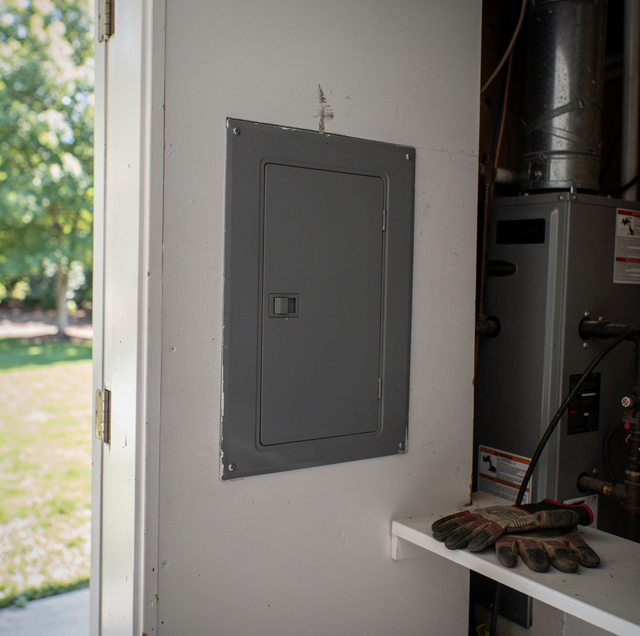
The Warm Cover And The Faint Hum
You walk past the panel in the garage or the hallway closet and rest a hand on the metal cover out of habit, the way you'd check a car hood after a long drive. It's warm. Not hot enough to yank your hand back, just warm enough to make you pause and wonder if that's normal. A few nights later you notice it again, this time with a sound: a low, steady hum coming from somewhere behind the cover, like a distant fluorescent light left on in another room. Nobody's home to ask, so you shrug it off and go back to what you were doing.
That instinct to dismiss it is understandable. A panel is supposed to sit quietly in the background, doing its job without asking for attention. But warmth and buzzing are two of the few ways an electrical panel can talk to you, and neither one is idle chatter. Both usually mean something inside the box is working harder than it should, generating heat or vibration in places built to stay still and cool.
What A Warm Or Buzzing Panel Is Actually Telling You
Every connection inside a panel- the point where a wire meets a breaker, where a breaker meets the bus bar, where the main lugs grip the incoming service wires- depends on tight metal-to-metal contact. When that contact loosens even slightly, electricity has to fight its way across a small gap instead of flowing cleanly. That fight creates resistance, and resistance creates heat, much like rubbing your palms together quickly warms your skin through friction. A loose lug or a corroded splice is doing the same thing on a much smaller scale, over and over, every time a circuit draws current.
A buzzing sound often comes from a related but slightly different cause: a breaker that's carrying more current than it's rated for, or one whose internal mechanism has started to wear and vibrate under load. Some breakers hum audibly when they're near their limit for extended stretches, especially if they're feeding several large appliances at once through a panel that was never sized generously to begin with.
Aging components play a role too. Panels don't fail all at once. Screws torqued correctly on installation day loosen gradually over years of heating and cooling, and breakers that once snapped cleanly develop sticky internal contacts. None of this happens overnight, which is exactly why a warm cover or a faint hum tends to be the first sign, not the last one, of a problem that's been building quietly for a while.
Why This Often Shows Up During Long Stretches Of Heavy Use
A panel that's borderline can go months without drawing attention to itself, then suddenly start acting up during a stretch of unusually heavy demand. Long runs of continuous air conditioning use are a common trigger. When a home's cooling system runs for hours at a time, day after day, the circuits feeding it and the panel components serving them are under sustained load far longer than they are during milder weather. A loose connection that might stay quiet under light, intermittent use can start heating up noticeably once it's asked to carry that current for hours on end without a break.
This cuts both ways, though. A loose lug, an undersized breaker, or a worn connection exists year-round, whether or not the load ever gets heavy enough to reveal it. Heavy seasonal load doesn't create the problem; it just pushes a marginal connection past the point where it can hide. A panel that's buzzing during a heat wave has usually had that weakness for a while, and the same weak connection will still be there once temperatures drop, quietly waiting for the next period of sustained demand to expose it again.
Surges And Switching Events Add Another Layer Of Stress
Heavy, continuous load isn't the only stress a panel deals with. Severe storms and the grid switching that comes with them can send voltage surges through a home's wiring as utilities reroute power or equipment trips and resets during outages. A single surge is usually brief, but repeated exposure over years can degrade breakers and connections that were already marginal, which is one more reason panel-level surge protection is worth discussing with an electrician. It's a separate mechanism from heat-driven overload, but the two often show up in the same aging panels, compounding whatever weakness was already there.
Aging Wiring Makes The Problem More Likely
Homes built decades ago were wired for a different set of expectations. Many still run on aluminum branch wiring and a 100-amp service that made sense when the home was new but predates the air conditioning, EV charging, and solar setups that modern households now ask a panel to support. Aluminum wiring, in particular, is prone to a specific failure pattern: the metal expands and contracts more than copper does with every heating cycle, and over the years, that movement can loosen the connection at the breaker or outlet, even when nothing was installed incorrectly. A loose aluminum connection is one of the most common causes of a warm panel cover or a buzzing breaker, and it's a pattern electricians see repeatedly in older homes that haven't had their wiring updated.
An undersized service compounds the issue. A 100-amp panel asked to support central air, an EV charger, and a growing list of larger appliances is operating closer to its ceiling more often than the builder ever anticipated, so the components inside it run warmer across the board, not just at one weak connection.
Why A Warm Panel Is A Fire Risk, Not Just An Annoyance
Heat inside an electrical panel doesn't stay contained to one spot forever. A connection loose enough to warm the breaker can, over enough cycles, warm the insulation around the nearby wire, and insulation softened by repeated heat is more likely to crack, arc, or fail outright. Buzzing breakers can also signal arcing already in progress, a small, intermittent discharge that generates its own localized heat independent of the load on the circuit. Arcing is one of the more common origins of electrical fires that start inside a panel or wall cavity, precisely because it can smolder for a long time before becoming obvious.
This is why a warm cover or a hum isn't something to note and revisit later. It's an early warning sign appearing at the one point in the process where a small fix is still possible.
What To Do The Moment You Notice It
If a panel feels warm to the touch, especially warmer than the surrounding wall or warmer than it's felt before, or if you hear a buzzing, humming, or crackling sound from inside it, treat it as urgent rather than curious. Don't open the panel cover, touch any breakers, or try to trace the sound yourself. The inside of a panel carries live current even when the main is switched off in some configurations, and diagnosing a heat or arcing issue safely requires equipment and training an electrician brings to the job, not a flashlight and a hunch.
If you can do so safely from outside the panel, and you have any doubt about what's happening, shut off the breaker for the affected circuit or the main disconnect itself while you arrange for an inspection. It's far better to lose power to part or all of the home for a few hours than let a suspected loose connection keep heating up unattended. Call a licensed electrician promptly and describe what you noticed, including how warm the cover felt, where the sound came from, and whether it's grown more noticeable over time.
What An Inspection And Repair Usually Involves
A licensed electrician diagnosing a warm or buzzing panel typically starts by checking connections at the breakers, the bus bar, and the main lugs for looseness or corrosion, often using a thermal imaging tool to spot hot points without opening anything up unnecessarily. If the cause is a loose or corroded connection, tightening or replacing the connection may resolve the issue. A worn or failing breaker gets replaced outright rather than repaired. When aluminum branch wiring is the underlying cause, the fix may involve remediation at the connection points rather than a full rewire, depending on how the aluminum was installed and how it's aged.
Sometimes the inspection reveals the bigger picture: a panel that's outdated, undersized for the home's current loads, or overloaded across multiple circuits. In those cases, an electrician may recommend a panel replacement or a 100- to 200-amp service upgrade, sometimes paired with a subpanel, to give heavier loads like an EV charger their own dedicated space rather than sharing an already-strained system. Adding surge protection at the panel level is a common companion recommendation, since it addresses the storm and grid-switching side of panel stress separately from the load and wiring side.
When The Warm Panel Points To A Bigger Upgrade
Not every warm panel needs a full replacement, but recurring warmth, more than one buzzing breaker, or a panel already known to be older and undersized for the home's current appliance and cooling load is a strong signal that a targeted repair is only a temporary patch. An electrician evaluating the panel can tell you honestly if the fix is contained or if the system has outgrown what it was built to handle.
Frequently Asked Questions
Yes. Sound and heat don't always show up together, since a breaker can vibrate audibly from internal wear or a marginal overload well before the resistance at a connection builds enough to make the cover noticeably warm. A humming sound on its own, even with a cool panel cover, is still worth having checked, since the vibration often points to a mechanical issue inside the breaker rather than a heat-related one.
A metal panel on an exterior wall or in an unconditioned garage can pick up ambient warmth from its surroundings on a hot day, just as any metal surface there would. What matters is whether the panel feels noticeably warmer than the wall right next to it, or warmer than it's ever felt before. Ambient warmth is uniform and matches its surroundings; a real problem tends to feel warmer at the panel specifically, sometimes concentrated near one section of the cover rather than spread evenly across it.
A single circuit breaker buzzing usually points to a problem isolated to that circuit and whatever it feeds. A main breaker or main disconnect buzzing is a different scale of concern, since every circuit in the home runs through that connection point, meaning a loose or failing main lug affects the whole panel's current path rather than one branch of it.
It can seem sudden even though the cause built up gradually. Repeated heating and cooling cycles, sometimes called thermal cycling, slowly loosen screws and connections over years, and a connection can cross from marginal to noticeably loose after one particularly demanding week of use. What feels like an overnight change is often the final stage of a slow process that wasn't loud or warm enough to notice until that point.
Not necessarily. In many cases, the fix is contained to one connection, one breaker, or one section of aging aluminum wiring, and the rest of the panel is sound. A full replacement or a service upgrade tends to come up only when the panel is already outdated, undersized for the home's current loads, or showing problems in multiple places rather than one isolated spot.
Yes. A faint burning or metallic odor near the panel, discoloration or scorch marks on the cover or nearby outlets, and lights that flicker or dim when a large appliance kicks on are additional signs worth reporting, along with heat or buzzing. None of these need to be present for a warm or humming panel to be worth addressing, but mentioning any of them to an electrician helps build a fuller picture of what's happening inside the box.
Schedule a panel inspection — get it checked out if your panel feels warm or you've heard buzzing near the breaker box. Efficient Electric serves Phoenix, Peoria, and the surrounding West Valley. Call (623) 810-9905.