
Some Rooms Lost Power But The Main Breaker Never Tripped
The Confusing Part Of A Partial Outage
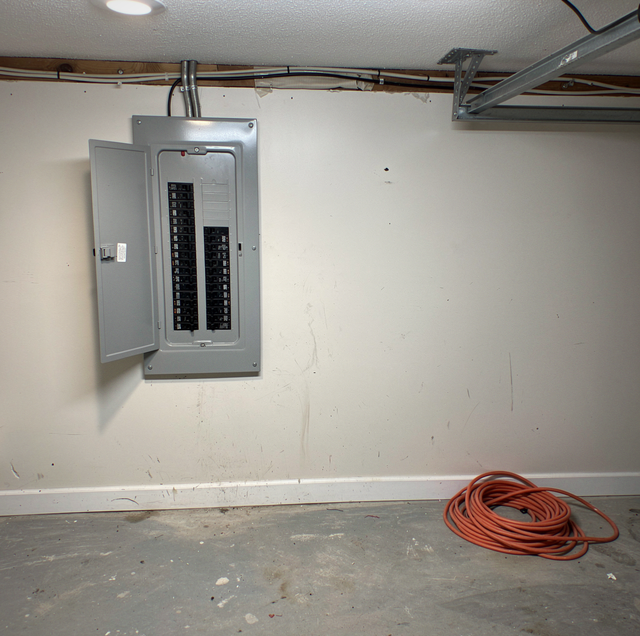
You flip a switch in the kitchen, and nothing happens, but the hallway light down the hall works fine. You walk to the bedroom, and the lamp turns on, but the outlet next to it is dead. You check the panel expecting to find the culprit, and every breaker sits exactly where it should: none tripped, none warm, nothing unusual. The refrigerator hums along in the kitchen while the microwave six feet away won't power on at all.
A whole-house outage has an obvious story: the utility is out, or the main breaker tripped. A partial loss with an intact main breaker doesn't fit that story, so the instinct is to assume it's minor and will sort itself out. It usually won't.
Why A House Doesn't Lose Power All At Once
A home's electrical system consists of separate branch circuits, each running from the panel to a specific group of outlets, switches, or fixtures. The main breaker protects the whole bundle from an overload big enough to threaten the service itself, but each branch circuit has its own breaker, its own wiring path, and its own points where a connection can fail. Losing power to part of a house while the main stays untouched almost always means the fault lies downstream of it, in a specific branch or at a shared point that only some of those branches pass through.
A main breaker that's fine tells you the service itself is intact, and the fault is narrower than a full outage. But "narrower" still covers several different causes with different fixes, and getting it wrong can waste time or mask something that needs attention sooner rather than later.
A Tripped GFCI Or AFCI Device Upstream
One of the most common causes of a dead section of a house is a tripped ground-fault or arc-fault device sitting somewhere other than the panel. A single GFCI outlet, usually in a kitchen, bathroom, garage, or outdoor location, often protects several other outlets downstream of it on the same circuit. If that first outlet trips, everything wired after it goes dead too, even outlets in a different room that share the same branch. The same logic applies to AFCI breakers protecting bedroom and living-area circuits: they can trip on an arc-fault condition without the main breaker ever noticing, since the fault current involved is a small fraction of what it takes to trip the main.
This is worth checking first because it's the easiest cause to rule out. Every GFCI outlet has a visible reset button, and a tripped one is usually obvious: a lit indicator that goes dark, or a button that pops out slightly from the face of the outlet.
A Dead Multi-Wire Branch Circuit
Some circuits, especially in kitchens and older additions, share a single neutral wire between two separate branch circuits, a wiring method used to save on a cable run through a wall or under a floor. When that shared neutral connection loosens, corrodes, or breaks at the panel or at a junction, both circuits sharing it can lose power together, or one can behave erratically while the other still works. Because these two circuits usually feed rooms that don't appear related on the surface, the pattern of what's dead and what isn't can seem random, even though it traces back to a single shared point.
A failed multi-wire branch circuit isn't something a homeowner can safely diagnose by testing outlets with a lamp. Identifying a shared-neutral fault means opening the panel and tracing which breakers pair up, work that involves exposed live connections and belongs to a licensed electrician.
A Breaker That Looks Fine But Isn't Switching Internally
A breaker in the "on" position isn't proof that it's actually passing current as it should. Breakers fail in more than one way, and one with worn or pitted internal contacts can lose continuity, effectively dying, without the toggle ever moving to the tripped position. From the outside, a failed breaker in this state looks identical to a working one. The only way to catch it is to check the breaker for voltage with a meter and confirm whether the circuit is actually dead all the way back to the panel.
This kind of failure tends to show up more after years of heavy cycling. A breaker that's been switched repeatedly, or carried a load near its rating for long stretches, develops wear in its internal contacts the way any mechanical switch wears with use. Long runs of continuous demand, like weeks of an air conditioner cycling around the clock, can accelerate that wear on a breaker already close to the end of its life.
A Loose Or Burned Connection At The Panel Or A Junction
The most serious cause here is a connection that's loosened or begun to burn where a branch circuit wire meets its breaker, or at a junction box between the panel and the dead outlets. Every connection point depends on tight metal-to-metal contact to carry current cleanly; when that contact loosens, resistance builds at the gap and generates heat every time the circuit draws power. Over time, that heat can char the wire insulation, blacken the connection, or damage the breaker terminal, at which point the circuit may go dead intermittently before failing outright.
This is what makes ignoring a partial outage a bad idea. A loose or burned connection doesn't announce itself with a tripped breaker, because the fault current usually isn't large enough to trigger the main breaker's overload protection. It can sit there, degrading with every use of the circuit, until it fails or starts a fire at the connection point. The dead outlets are the visible symptom; the overheating connection behind the panel cover is what actually matters.
What's Safe To Check Yourself
Before calling anyone, it's reasonable to rule out the easy causes on your own, as long as you stay outside the panel itself.
Reset every GFCI outlet you can find: Check kitchens, bathrooms, the garage, and exterior outlets, even in rooms that seem unrelated, since one GFCI can protect outlets several rooms away.
Look at labeled breakers without touching anything inside the panel: If a toggle sits in a middle position, or feels different from its neighbors, note it for the electrician, but don't force it back to on.
Check whether the dead outlets share a pattern, like one side of a room versus the other, or upstairs versus downstairs, and mention that pattern when you call.
Unplug large appliances on the affected circuit in case something plugged in is drawing a fault current that's confusing the picture, then see if anything changes.
None of that requires opening the panel cover, removing a breaker, or probing anything with a meter. If resetting GFCIs and checking toggles doesn't bring the dead section back, the cause is one of the ones above, and each requires a professional from that point forward.
What Requires A Licensed Electrician
Anything beyond resetting a GFCI or glancing at breaker positions belongs to a professional. Tracing a multi-wire branch circuit, testing a breaker for internal continuity, or inspecting a panel connection all involve exposed conductors carrying live current, and diagnosing them safely requires a meter, training, and knowledge of that specific panel's layout. Opening a panel cover without that background risks a shock at minimum, and pulling on a breaker or wire that's already compromised can turn a contained fault into a bigger one.
An electrician diagnosing this kind of call typically tests voltage at the breaker feeding the dead section, then works backward: the breaker itself, its terminal connection, and any junction boxes along the circuit's path. If a GFCI or AFCI device keeps tripping repeatedly rather than staying reset, that's also worth having checked, since a device that won't hold a reset is often protecting you from a fault still active on the circuit.
Why "Only Part Of The House" Still Deserves Urgency
It's tempting to treat a partial outage as lower priority than a full one simply because most of the house still has power. That reasoning gets the risk backward. A full outage caused by a tripped main breaker means the safety device did exactly what it was built to do: catch a serious overload and shut the whole service down before anything got worse. A partial outage with an intact main breaker often means the opposite: something is wrong at a level the main breaker's protection was never designed to catch, and it's continuing quietly rather than tripping cleanly.
Treating the dead half of the house as an inconvenience to route around, running extension cords to the affected rooms or simply avoiding them, lets whatever caused the failure keep sitting there unaddressed. A dead circuit today can be a scorched connection or a degraded breaker tomorrow, and the gap between those two states isn't always long. A partial power loss is a diagnostic clue pointing at a specific, fixable problem, and the sooner it gets identified, the smaller the fix tends to be.
Quick Reference: Matching The Symptom To The Likely Cause
| What You Notice | Likely Cause | What To Do |
|---|---|---|
| Outlets dead in different rooms, one general area | Tripped GFCI upstream on a shared circuit | Reset every GFCI outlet |
| Two unrelated circuits go dark together. | Failed multi-wire circuit sharing a neutral | Call an electrician; don’t test the panel yourself |
| Breaker looks normal, fully "on," circuit is dead | Breaker with worn internal contacts | Call an electrician for a voltage test |
| Outlets fail intermittently | Loose or heat-damaged connection | Call an electrician promptly; treat as urgent |
| GFCI trips again minutes after reset | Active fault still present | Stop resetting it; call an electrician |
Frequently Asked Questions
Rarely, and if it does, that's a warning sign rather than good news. A circuit that goes dead and comes back on its own, without anyone touching a breaker, often means a connection is making and breaking contact intermittently as it heats and cools, a sign of a worsening connection rather than a resolved one. An electrician can check for heat damage at the suspected connection even after power has returned.
Major appliances are frequently wired on their own dedicated circuit, so a fault on a shared outlet circuit doesn't take down food storage or other essential equipment. One appliance staying on while nearby outlets go dark usually confirms the two are on separate branch circuits, which helps narrow down which one an electrician needs to trace.
Testing whether an outlet has voltage present with a plug-in tester is reasonably safe and helps describe the problem accurately over the phone. Testing inside the panel with a meter, or opening a breaker to check its internal contacts, is a different level of risk and should be left to someone trained to work around an energized panel.
No. A tripped GFCI needs nothing more than a reset, and a loose connection can sometimes be tightened without swapping any parts. A breaker only needs replacing when testing shows it has failed internally, confirmed with a meter rather than by the toggle position.
The main breaker is sized to protect the entire service from a large overload, so it requires a fault current far greater than that produced by a single failing breaker, a loose connection, or a tripped GFCI to trip. A weak connection can draw enough extra current to generate heat and cause damage without ever coming close to the threshold that would trigger the main disconnect step.
Mention which rooms or outlets are affected, whether any GFCI resets helped even briefly, whether the loss happened suddenly or gradually, and whether any breaker looked or felt different from the others. That pattern of information often lets an electrician bring the right tools and narrow down the likely circuit before ever opening the panel.
Schedule a diagnostic visit — get a licensed electrician to trace the dead circuit and check the panel before a small fault becomes a bigger one. Efficient Electric serves Phoenix, Peoria, and the surrounding West Valley. Call (623) 810-9905.