
Warm Outlet or Switch? What the Heat Is Telling You
You reach over to plug in a phone charger or flip a switch on your way out the door, and your hand brushes against a faceplate that feels off. Not hot enough to yank your fingers back, just warm in a way an outlet or switch has no business being. You decide it's probably nothing and move on, and most of the time nothing happens the next day. That's part of what makes a warm outlet worth taking seriously: it can sit quietly getting worse for weeks before anything dramatic happens.
An outlet or switch plate covers a small metal junction where wires connect to a device, designed to carry current all day without producing noticeable heat. When you can feel warmth through the plastic, something inside is generating more heat than the design allows for. The usual reasons are a loose wire connection, a circuit carrying more than it should, an outlet or switch worn out internally, or a high-draw appliance on an old device never built for today's loads. Some are minor, and some are not, and telling them apart matters more than any single fix.
A Loose Wire Connection Is The Most Common Cause
Every outlet and switch grips its wires at a small number of contact points, either a screw terminal wrapped with wire or a spring-loaded backstab hole where the wire pushes straight in. Both work fine when the grip is tight, because tight metal-to-metal contact lets current pass with almost no resistance. Loosen that grip even slightly, and current has to squeeze across a narrow gap instead, and that squeeze creates resistance the same way pinching a hose narrows the flow and builds pressure behind it.
Resistance turns straight into heat. A connection that has loosened from age, vibration, or a wire that was never torqued down properly the first time runs measurably warmer under load than a tight one, and it keeps getting worse on its own: heat expands the metal slightly, which loosens the grip a little more, which raises resistance further, which produces more heat. That slow cycle is why a connection that felt fine last year can turn noticeably warm this year with nothing else in the house having changed. Homes with aluminum branch wiring are especially prone to this pattern, since aluminum expands and contracts more with temperature swings than copper does, and that repeated movement is a known way for a once-solid connection to work itself loose over time.
An Overloaded Circuit Or A High-Draw Appliance On An Old Outlet
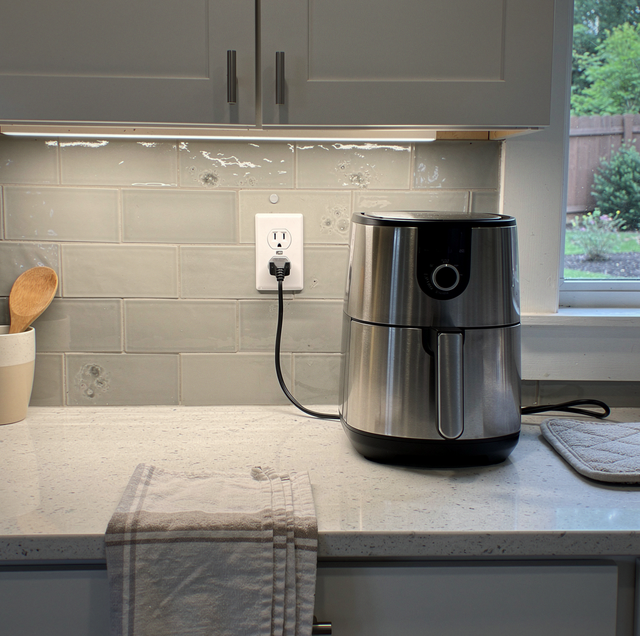
Warmth doesn't always mean a connection has failed. Sometimes the outlet and wiring are fine, but the load running through them is heavier than the circuit was sized to carry comfortably for long stretches. A space heater, a window air conditioner, a hair dryer on high, or a countertop appliance like an air fryer can each pull several amps on its own, and running one for an hour or more on a circuit already shared with other devices pushes the wire and the outlet's internal contacts toward their working limit.
An older receptacle adds another layer. Standard household outlets from decades ago were rated for the lighter loads common at the time, and their internal contacts, terminal screws, and housing were sized accordingly. Ask that same outlet to repeatedly carry a modern high-draw appliance, and it runs warmer than a newer, heavier-duty device would under the same load, simply because it has less built-in margin. This is also why warmth often shows up first on whichever receptacle feeds the space heater or the microwave, rather than an outlet that only ever powers a lamp or a phone charger.
A Worn-Out Outlet Or Switch Losing Its Grip
Outlets and switches are mechanical devices with a working life, not permanent fixtures. Every time a plug is inserted and removed, the metal contact blades inside a receptacle flex slightly to grip it, and every time a switch toggles, its internal contacts open and close against each other. Thousands of cycles later, spring tension relaxes and contact surfaces pit or oxidize, producing the same kind of resistance heating as a loose wire connection, only at the plug-and-blade interface instead of the wiring terminal.
A worn switch shows a similar pattern of wear. Internal contacts that used to snap cleanly together now make partial contact for a fraction of a second during the switch, and that brief partial-contact arc heats the metal each time the light goes on or off. A switch that feels warm, especially one that also feels loose in the wall plate or where the light flickers as it's toggled, is usually further along in this wear pattern than a receptacle that just runs a phone charger.
Why Warm To The Touch Is A Fire-Safety Signal, Not A Quirk
It's tempting to treat a warm outlet the way you'd treat a squeaky door hinge: annoying, but not urgent. The difference is that heat inside an electrical device doesn't stay contained to the spot where it started. The plastic housing around an outlet or switch, and the insulation on the wires feeding it, are rated to handle normal operating temperatures, not sustained extra heat from a bad connection. Repeated heating softens that plastic and insulation over time, making it more likely to crack, discolor, or eventually arc.
Arcing is the real danger, because it can smolder inside a wall cavity for a long stretch before producing any smoke or flame you'd notice from the room. A loose connection that runs warm today can be the same connection that arcs against dry wood framing or insulation months from now, at a moment with no warning beyond the heat you already felt and decided to live with. That is the entire reason warmth gets treated as a real signal rather than a cosmetic complaint: it is one of the very few ways a failing connection can tell you something is wrong before it fails completely.
What To Do The Moment You Notice It
Stop using that outlet or switch as soon as you notice the warmth, and unplug whatever is currently connected to it. If a lamp or appliance is plugged in and running, that's the safest first move regardless of what turns out to be causing the heat. Don't keep testing it by plugging things in and out to see if the warmth changes, and don't remove the faceplate or poke at the wiring yourself; a warm outlet or switch is still carrying live current, and opening it up is a job for someone trained to work on energized circuits.
If you can locate the breaker for that circuit without difficulty, switching it off is a reasonable next step while you arrange for someone to look at it, especially if the warmth was strong or you noticed any smell along with it. Losing power to that one circuit for a few hours is a minor inconvenience next to leaving a heat-producing connection running unattended. Note what you observed: which outlet or switch it was, what was plugged in at the time, whether the warmth built up gradually or showed up suddenly, and whether there was any odor, discoloration, or crackling sound. That detail helps whoever inspects it find the fault faster.
Same-Day Call Versus A Scheduled Visit
Not every warm outlet needs someone on-site within the hour, but some signs push it into same-day territory. Call right away, and shut off the breaker if you can, when the outlet or switch is hot rather than just warm, when you smell burning plastic, when the faceplate shows scorch marks, melting, or discoloration, when you see sparking, or when a breaker on that circuit starts tripping along with the warmth. Any of those means the connection has moved past the early stage.
A scheduled visit within the next day or two is reasonable when the warmth is mild, shows up only while a specific high-draw appliance is running, and disappears once it's unplugged, with no odor, discoloration, or repeated tripping. That pattern still deserves an inspection, since a marginal connection or an undersized outlet doesn't fix itself, but it isn't an active emergency in the meantime. Either way, stop routing heavy loads through that outlet until it's been checked.
What An Inspection Usually Finds
An electrician checking a warm outlet or switch typically starts by killing power to the circuit, then pulling the device to inspect the wire connections directly, often measuring resistance or using a thermal imaging tool to confirm exactly where the heat is concentrated before anything is reassembled. A loose connection gets re-terminated, sometimes onto a heavier-duty spec-grade device with a stronger internal grip than a standard builder-grade outlet. A worn-out receptacle or switch is usually replaced outright rather than repaired, since the internal mechanical wear can't be tightened back to new.
If the real issue is a circuit routinely asked to carry more than it should, the fix isn't always a new outlet at all. Moving a high-draw appliance to its own dedicated circuit directly addresses the overload, rather than leaving the same stress to wear out whatever device is installed next.
Frequently Asked Questions
Yes, to a point. A dimmer works by rapidly switching current on and off many times a second rather than passing it straight through, and that switching action generates some heat as a normal part of how the device functions. A dimmer that feels comfortably warm, especially when controlling a heavily loaded fixture, isn't automatically a fault. The line gets crossed when it feels hot rather than warm, or when a plain toggle switch on the same wall runs just as warm with no dimming function to explain it.
It can, since kitchens and laundry areas typically run higher-draw circuits than bedrooms or living rooms. A kitchen countertop circuit is often built to a higher amperage specifically because toasters, air fryers, and microwaves can run at the same time, so that circuit sees sustained heavy current far more often than an outlet feeding a lamp or a router. A warm receptacle in a kitchen or laundry room deserves a bit more urgency than one in a rarely used spare bedroom.
It can contribute in older homes still wired with two-prong, ungrounded outlets. Without a ground path, fault current that would normally return through the ground wire instead has fewer places to go, and in some fault conditions that means more current lingering at the connection point itself. It's not the most common cause on its own, but it's one more reason an ungrounded receptacle is a good candidate for a broader outlet upgrade.
There's no fixed timeline, and that unpredictability is the risk. A marginal connection can run warm for months without incident, then finally arc the first time a heavier load or a hot stretch pushes it past what it can tolerate. Once arcing starts, it can smolder inside a wall cavity against wood framing or insulation before producing visible smoke, which is why fire investigators looking at electrical-origin fires so often trace them back to a connection that had been quietly overheating long before anyone noticed.
Yes, and it's worth ruling out first. A frayed appliance cord, a failing internal component, or a plug with bent or loose blades can each generate heat right where the plug meets the outlet, even when the wiring is fine. Try the same outlet with a different appliance; if it stays cool, the appliance or its cord is the more likely source and worth replacing.
Yes. An arc-fault circuit interrupter breaker senses the electrical signature of arcing, including small intermittent arcs that a standard breaker's overcurrent protection would never catch because the current draw stays within normal limits. Many older homes were built before AFCI protection was standard on bedroom and living area circuits, so a loose connection there can run warm and even arc intermittently without ever tripping a conventional breaker. Adding AFCI protection to those circuits during an outlet repair catches this failure mode that heat alone doesn't always announce loudly.
Schedule an outlet or switch inspection — get a warm outlet or switch checked out before it becomes a bigger problem. Efficient Electric serves Phoenix, Peoria, and the surrounding West Valley. Call (623) 810-9905.